The Complete Guide to Buying a Home in Roanoke VA (2026)
March 18, 2026
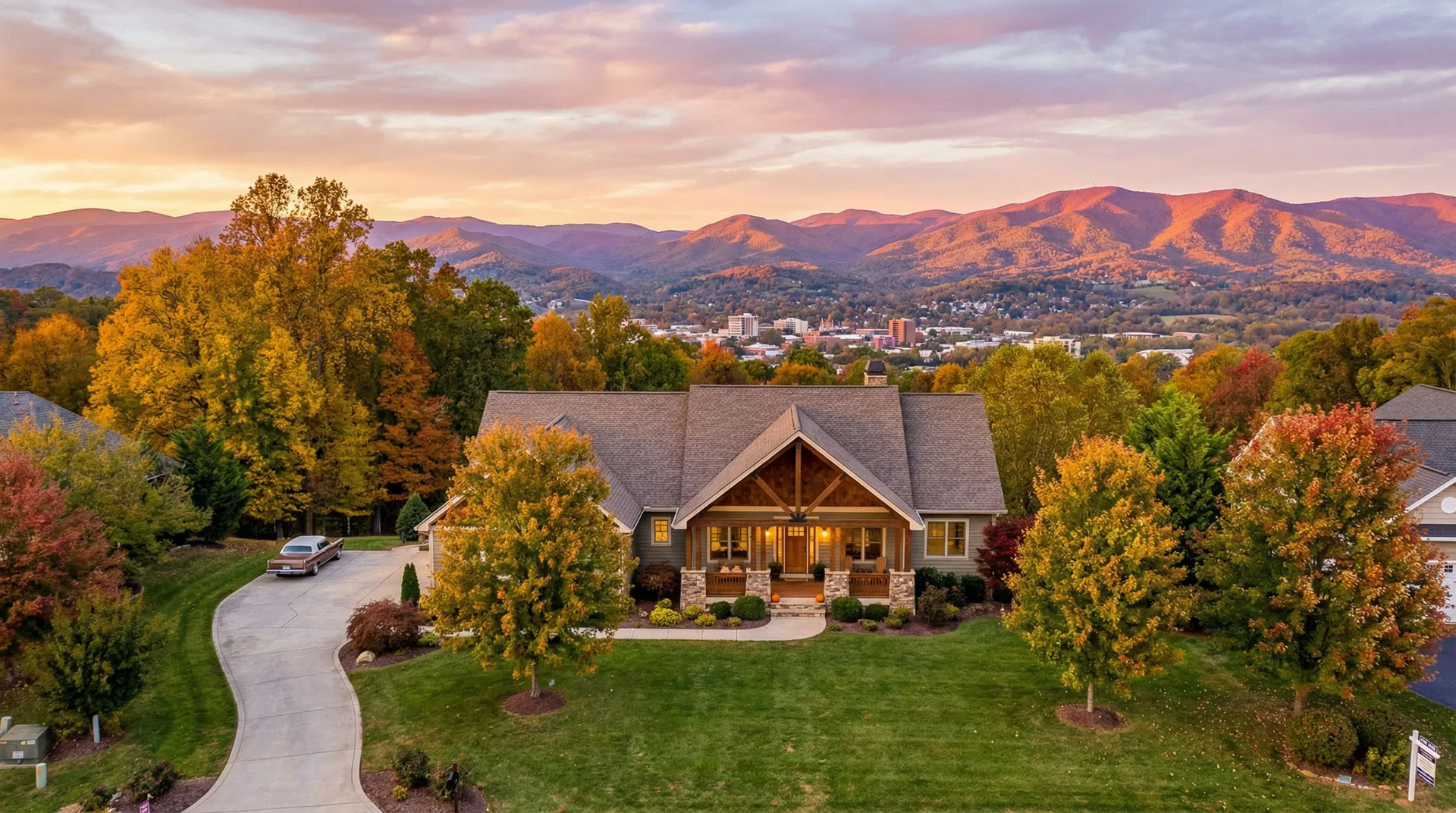
If you're a first-time home buyer in Roanoke VA, you may have already noticed something a little different about this market compared to the rest of Virginia: the math actually works. While buyers in Northern Virginia and Richmond are stretching well past $450,000 for a starter home, the Roanoke Valley is still offering solid, move-in-ready homes in the low-to-mid $200s — often within walking distance of restaurants, trails, and some of the best mountain scenery in the state.
But affordable doesn't mean simple. Buying your first home in Roanoke still involves financing decisions, competitive offers, Virginia-specific programs, and neighborhood nuances that can make a big difference in how your experience unfolds. This guide is written for you — someone who has never done this before, who is specifically looking in the Roanoke area, and who wants real, local insight rather than a generic checklist that could apply anywhere in the country.
Let's walk through everything you need to know.
Why Roanoke VA Is One of the Best Markets for First-Time Home Buyers in Virginia
Prices That Still Make Sense
Roanoke's median home price sits roughly 48% below the national average — a gap that is genuinely rare for a city with Roanoke's quality of life. According to Virginia REALTORS® data, Roanoke's median sale price climbed past $293,000 in 2025, representing more than 6% year-over-year growth. That appreciation reflects real demand, not a bubble. What it means practically: your dollar goes further here than almost anywhere else in Virginia, and your home is likely to hold and build value over time.
The sweet spot for first-time buyers entering the Roanoke market heading into 2026 is the $225,000–$285,000 range. Homes in this band are moving fast — some of the quickest in the entire metro — so getting pre-approved before you start touring is not optional. It is essential.
Cost of Living Beyond the Mortgage
A lower purchase price is only part of the affordability story. Roanoke's overall cost of living runs about 8% below the national average. Property taxes are moderate, utilities are manageable, and you can actually find a restaurant, mechanic, or grocery store close to wherever you end up buying. That matters more than people realize when you're budgeting for life as a homeowner.
Jobs, Healthcare, and a Growing Economy
Roanoke is the economic hub of western Virginia, and its job market is more diversified than many people expect. Carilion Clinic — one of the largest employers in the region — anchors a growing healthcare and biomedical research corridor centered around the Virginia Tech Carilion School of Medicine. You'll also find manufacturing, distribution, education (Hollins University, Virginia Western Community College), and a fast-growing tech sector. The region's unemployment rate has consistently hovered below 3.7%, which matters a great deal when you're taking on a 30-year financial commitment.
The Blue Ridge Mountains Are Not a Selling Point. They're a Lifestyle.
Let's be direct: there are few cities in the eastern United States where you can walk out of a suburban starter home and be on a mountain trail in under 20 minutes. The Appalachian Trail, the Blue Ridge Parkway, Carvins Cove Natural Reserve, and the Roanoke River Greenway are not weekend escapes for Roanoke residents — they are part of daily life. If quality of life and outdoor access factor into where you want to put down roots, Roanoke has very few competitors at this price point.
The Roanoke VA Housing Market Landscape in 2026
Where Prices Stand Right Now
Depending on the data source and the specific zip codes you're watching, Roanoke's median sale price ranges from the mid-$220s to the low $290s heading into 2026. The variance reflects how different the city's neighborhoods are from one another — South Roanoke [blocked] commands a premium, while parts of northwest and northeast Roanoke offer significantly more entry-level inventory.
Analysts are forecasting modest price appreciation of 2–4% through the rest of 2026, alongside a gradual improvement in affordability as mortgage rates trend toward the 6% range. This is not a crash scenario and it is not a runaway seller's market. It is a normalizing market with real opportunity for buyers who are prepared.
Inventory and Competition
Inventory in Roanoke remains tight but is slowly expanding. The most competitive price bands — particularly homes listed between $275,000 and $325,000 — are averaging fewer than 20 days on the market before going under contract. Well-priced, well-presented homes in desirable neighborhoods can still draw multiple offers.
What does that mean for you as a first-time buyer? Get your financing in order before you fall in love with a house. Know your top number before you tour. And consider working with an agent who has deep relationships in the local market and knows about homes before they hit Zillow — because some of the best opportunities in Roanoke never get that far.
Roanoke vs. Surrounding Counties
The City of Roanoke offers the most walkable, urban experience — and some of the most character-rich housing stock. But many first-time buyers in the region also look seriously at Roanoke County, Salem [blocked], and Vinton [blocked], which offer newer construction, different school districts, and in some cases lower entry price points. Your commute patterns and lifestyle priorities should drive that decision as much as price.
Local Insight: Homes in Salem and parts of Roanoke County tend to move slightly slower than equivalent city homes, which can give first-time buyers a little more breathing room during the offer process.
First-Time Home Buyer Programs and Down Payment Assistance for Roanoke VA Buyers
This is where many first-time buyers leave serious money on the table simply because they didn't know to ask. Virginia has a strong ecosystem of first-time buyer support programs, and several of them are directly relevant to purchasing in the Roanoke market.
Virginia Housing Down Payment Assistance Grant
Virginia Housing (formerly VHDA — the Virginia Housing Development Authority) offers a Down Payment Assistance Grant that provides 2–2.5% of the home's purchase price in grant funds. On a $260,000 purchase, that's up to $6,500 you never have to repay — it is a true grant, not a loan. It must be paired with an eligible Virginia Housing first mortgage (FHA, conventional, or their no-mortgage-insurance conventional product), and requires a minimum 620 credit score. Income limits vary by county and household size, so confirming your eligibility with a Virginia Housing-approved lender is the right first step.
Virginia DHCD HOMEownership Down Payment Assistance
The Virginia Department of Housing and Community Development (DHCD) offers a separate down payment assistance program that functions as a forgivable loan. Borrow up to $14,999 and remain in the home for five years, and it is fully forgiven. The program scales for higher amounts with longer required residency periods. This can be combined with the Virginia Housing grant under the right circumstances, which is why working with a lender who knows how to layer these programs is so valuable.
Virginia Housing Mortgage Credit Certificate (MCC)
The Mortgage Credit Certificate program is an often-overlooked tool that converts a portion of your annual mortgage interest into a direct federal tax credit — not a deduction, a credit — every single year for the life of your loan. On a modest Roanoke purchase, this can meaningfully reduce your effective monthly cost of homeownership over time.
FHA, USDA, and VA Loans
Beyond state programs, your loan type itself matters enormously. FHA loans remain a strong option for first-time buyers with credit scores in the 580–640 range, requiring as little as 3.5% down. If you are a veteran or active-duty military, a VA loan offers zero down payment and no monthly mortgage insurance — an extraordinary benefit that is dramatically underutilized in the Roanoke market. USDA loans are also worth exploring if you're open to properties in the more rural parts of Roanoke County and the surrounding region, as qualifying areas can offer 100% financing.
Pro Tip: Ask any lender you're considering whether they are a Virginia Housing-approved lender and whether they have experience stacking DHCD and Virginia Housing assistance programs together. Not every lender knows how to do this, and it can make a four-to-five-figure difference in what you bring to closing.
A Local Lender Worth Knowing
One lender I consistently recommend to first-time buyers in the Roanoke area is Brad Hall with CrossCountry Mortgage, located right here in Roanoke on Brambleton Ave. Brad specializes in FHA, VA, and conventional purchase loans — exactly the loan types most relevant to first-time buyers — and brings genuine local knowledge to every transaction. CrossCountry is consistently recognized as one of the top retail mortgage lenders in the country, which means Brad has access to a wide product menu including programs you won't find at every lender. You can reach him directly at (540) 274-3640 or visit his page at crosscountrymortgage.com/roanoke-va-2621/bradley-hall. Working with a local lender rather than an online-only lender often gives your offer a credibility advantage with sellers and listing agents, who appreciate knowing there's a real professional close by handling your file.
Roanoke Neighborhoods Worth Knowing as a First-Time Home Buyer in Roanoke VA
Roanoke is a city of distinct neighborhoods, and understanding the differences between them will help you focus your search on areas that genuinely fit your lifestyle — not just your budget.
Grandin Village and Raleigh Court
If walkability, character, and community feel are at the top of your list, Grandin Village [blocked] and the adjacent Raleigh Court neighborhood belong on your radar. Centered around the historic Grandin Theatre and a walkable strip of independent coffee shops and restaurants, these neighborhoods feature early 20th-century bungalows and craftsman homes on tree-lined streets. Homes here command a premium relative to other city neighborhoods, but they also hold their value exceptionally well. For a first-time buyer who plans to be in their home for five-plus years, this is one of the strongest long-term value propositions in the city.
Wasena
Wasena sits right along the Roanoke River, offering direct trail access to the greenway and Wasena Park. The housing stock is a mix of bungalows and smaller homes at prices that are accessible for first-timers. It feels active and social, draws a younger demographic, and is the kind of neighborhood where people actually know their neighbors. Proximity to downtown keeps commutes short, and the outdoor recreation access is genuinely exceptional.
South Roanoke
South Roanoke [blocked] is the city's most established and prestigious neighborhood — stately older homes, shaded streets, and strong proximity to Carilion Roanoke Memorial Hospital and River's Edge Park. Prices here are at the higher end of what most first-time buyers can stretch to in the city, but the neighborhood has virtually no price volatility risk. If you're in healthcare or your budget reaches toward $300,000 and up, South Roanoke is worth understanding.
Hollins (Northern Roanoke County)
For first-time buyers who prioritize newer construction, easier parking, and proximity to northern employment centers, the Hollins [blocked] area of Roanoke County offers solid entry-level pricing and steady appreciation potential. It's less walkable than the city neighborhoods, but commutes to major business parks are convenient, and the area continues to attract new residents and development.
Garden City
Garden City, located southeast of downtown, is one of Roanoke's quietly emerging areas. Mid-century homes on larger lots, growing buyer interest, and below-average price points make it one of the more interesting value plays in the current market for buyers who are willing to do a little research and are comfortable with a neighborhood in transition.
School District Note: If schools are a priority, Roanoke County Schools consistently outperform Roanoke City Schools on statewide metrics. That does not mean city schools lack excellent options — several city magnet and specialty programs are outstanding — but buyers with young children frequently end up choosing the county or Salem for school district considerations.
The Step-by-Step Home-Buying Process: Roanoke-Specific Context
Step 1: Get Pre-Approved (Not Pre-Qualified)
There is a meaningful difference between pre-qualification and pre-approval. A pre-approval involves verified income documentation, a credit pull, and an underwriter's review — it carries real weight when you make an offer. A pre-qualification is often just a conversation. In Roanoke's current market, sellers expect to see a legitimate pre-approval letter, and listing agents routinely call lenders to confirm the buyer is solid. Get the real thing.
Step 2: Define Your Priorities Before You Start Touring
Buying your first home in Roanoke is an emotional experience — and that's fine, but it can cloud your judgment if you haven't anchored to your priorities. Before you tour a single property, sit down and rank what matters most to you: commute distance, school district, walkability, yard size, garage, basement, neighborhood character. Know the difference between your must-haves and your nice-to-haves. The Roanoke market moves quickly enough that making a decision under pressure is part of the reality, and knowing your priorities in advance will help you move confidently when the right home appears.
Step 3: Work with a Local Expert
This is not a plug for any particular agent. It is practical advice: Roanoke is a relationship-based real estate market. An agent with deep local roots knows which streets flood, which neighborhoods are up-and-coming, which sellers are motivated, and — critically — which homes have issues that don't show up on Zillow. Seventeen years of working in this market has taught me that the difference between a smooth transaction and a painful one almost always traces back to the local knowledge and relationships your agent brings to the table.
Step 4: Making an Offer in the Roanoke Market
The Roanoke market has shifted from the frantic multiple-offer environment of 2021–2022, but well-priced homes in desirable neighborhoods still attract multiple buyers. Your offer strategy should account for current comparable sales, the specific neighborhood's competition level, and the seller's motivations (which a good agent will know how to find out). An escalation clause can help in a competitive situation without requiring you to blindly overbid.
Step 5: The Virginia Inspection and Disclosure Process
Virginia is a buyer-beware state, but sellers are required to complete a Residential Property Disclosure Act form that covers known material defects. This does not replace an independent home inspection — it supplements it. In a Roanoke purchase, pay particular attention to the inspection of HVAC systems (many city homes have older systems), the condition of basements and crawl spaces (drainage and moisture are common issues in homes near the Roanoke River), and the roof. Budget for deferred maintenance, especially in the $200,000–$250,000 price range where older inventory is most common.
Step 6: Navigate Closing in Virginia
Virginia uses attorneys for real estate closings — you'll work with a title company and closing attorney who handles the transfer of title and the settlement of funds. Closing costs in Virginia typically run 2–3% of the purchase price for buyers, which can be partially offset by down payment assistance programs or seller concessions negotiated into your contract. Most purchases in Roanoke close in 30–45 days from contract ratification.
Commute Considerations and Practical Life in Roanoke
One of the best-kept secrets about Roanoke is how short the commutes are. The entire metro area is compact, and most residents can get from a residential neighborhood to their workplace in under 20 minutes. If you work at Carilion, you're genuinely spoiled for choice in terms of neighborhoods within a short drive. The same goes for Virginia Western, the downtown business district, and the major industrial and distribution corridors near I-81 and 460.
Roanoke does not have a robust public transit system, so plan your housing decision around car commutes. That said, the Roanoke River Greenway connects many neighborhoods by bike, and it is genuinely feasible to commute to downtown by bicycle if you're in Wasena, Grandin, or South Roanoke.
For buyers considering locations in Roanoke County vs. the City of Roanoke, the practical commute difference to most major employment centers is usually 5–10 minutes — not a dramatic factor, but worth mapping out for your specific workplace before committing to a neighborhood.
What to Expect from the Roanoke VA Real Estate Market Through the Rest of 2026
Heading into the second half of 2026, the Roanoke housing market reflects a broader Virginia trend: steady, sustainable appreciation rather than the volatility of recent boom years. Analysts project 2–4% price growth for the Roanoke metro in 2026, alongside modest inventory increases that give buyers incrementally better selection without tipping into buyer-favored territory.
Mortgage rates are the wild card. Most forecasters expect 30-year fixed rates to hover around 6% through 2026, with potential for modest dips toward year-end. For a Roanoke first-time buyer purchasing in the $250,000 range, each half-point shift in your rate meaningfully affects your monthly payment — which is another reason to work with a lender who can help you understand your rate-lock options and timing strategy.
The broader macro picture — continued migration from higher-cost markets, growing recognition of Roanoke's quality of life, and the city's ongoing downtown revitalization — supports continued demand from both local buyers and people relocating from Northern Virginia, Richmond, and even the D.C. metro area. Roanoke is no longer an overlooked market. It is an emerging one, and first-time buyers who move decisively in 2026 are well-positioned to benefit from that trajectory.
Ready to Buy Your First Home in Roanoke? Here's Where to Start
Buying your first home is one of the most significant financial decisions you will ever make. In Roanoke, the conditions are genuinely favorable for first-time buyers right now — relative affordability, strong assistance programs, real community, and a market that rewards preparation without punishing patience.
Here is a practical checklist to get moving:
- Check your credit score and address any issues at least 60–90 days before you plan to make offers
- Contact a Virginia Housing-approved local lender to explore down payment assistance eligibility
- Get fully pre-approved — not just pre-qualified — before your first home tour
- Define your neighborhood priorities and commute requirements before you fall in love with a house
- Partner with a local buyer's agent who has deep roots in the Roanoke Valley and understands the specific neighborhoods you're considering
- Take Virginia Housing's free homebuyer education course, which is required for many assistance programs and genuinely useful
I've spent 17 years helping buyers navigate the Roanoke VA real estate market, and I can tell you honestly: it is a great place to buy a first home. The community is real, the value is there, and the mountains don't hurt either.
Have questions about buying your first home in Roanoke? Reach out directly [blocked] — I'm happy to talk through your situation, no pressure, no obligation.